Renovating a property in Spain is an opportunity to completely rethink how a home looks and functions. But many of the decisions that determine the final result need to be made before construction begins.
Whether you are renovating a permanent home, holiday property or investment property, here are six common mistakes worth avoiding.
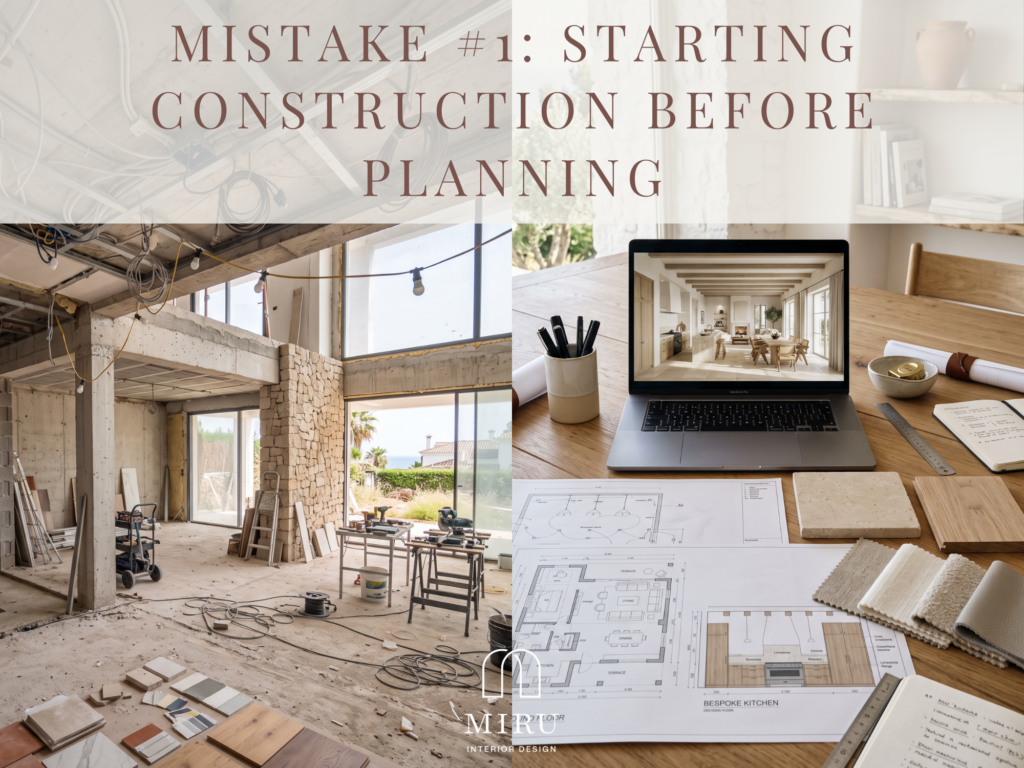
It can be tempting to begin demolition as soon as possible, particularly when the changes seem obvious.
Before construction starts, establish the layout, kitchen and bathroom plans, built-in elements and main furniture positions. These decisions affect lighting, electrics, plumbing and circulation throughout the property.
A clear design plan gives the contractor something concrete to work from and reduces changes once work is already underway.
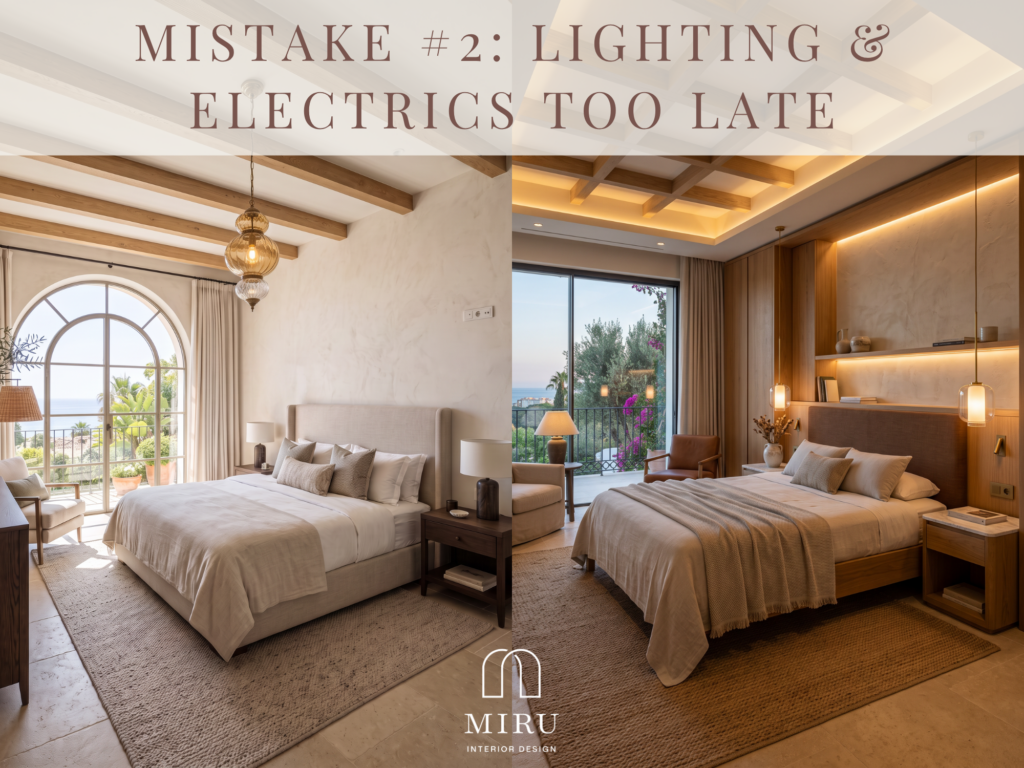
Lighting and electrical planning should happen once the furniture layout is established, not at the end of the renovation.
Sockets, switches, pendants and wall lights need to relate to how the space will actually be used. A dining pendant should align with the table, bedside electrics with the bed and furniture, and kitchen lighting with the final cabinetry.
Planning these positions early helps avoid unnecessary changes during construction and allows lighting to become part of the architecture rather than an addition at the end.
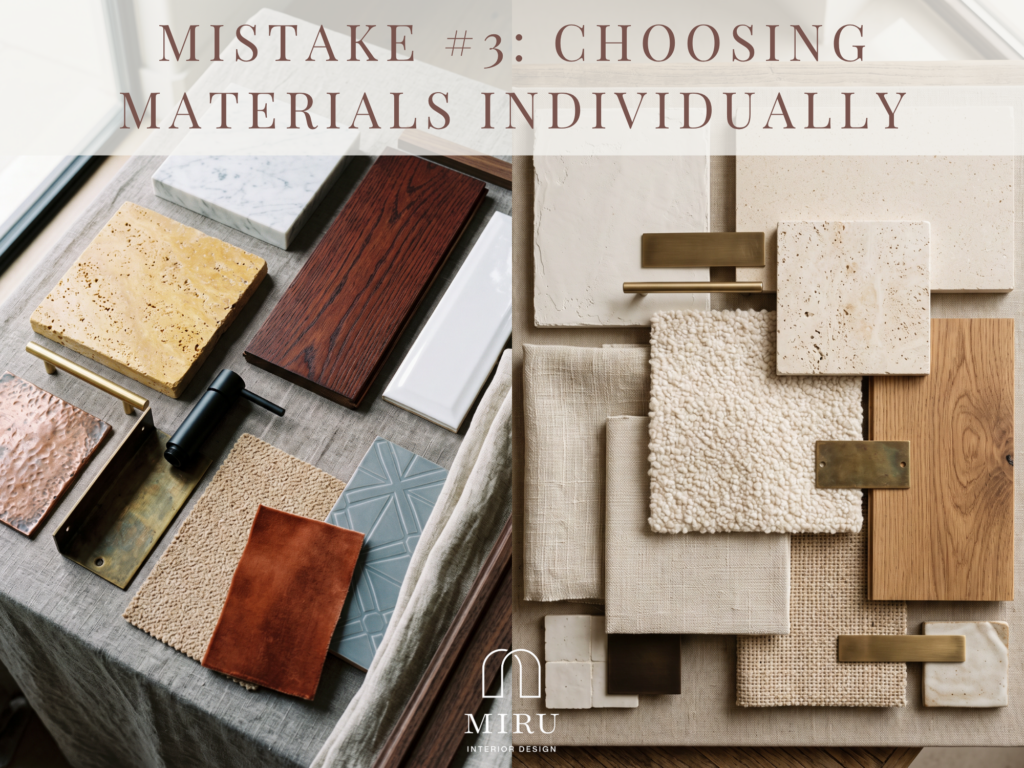
A beautiful stone, tile or wood sample does not necessarily work with every other finish in the property.
Instead, establish an overall material palette early in the design process. Flooring, kitchen finishes, bathroom materials, joinery, wall colours and metals should work together rather than compete for attention.
Looking at materials as a complete composition also makes it easier to create continuity between different rooms and gives the property a more cohesive feel.
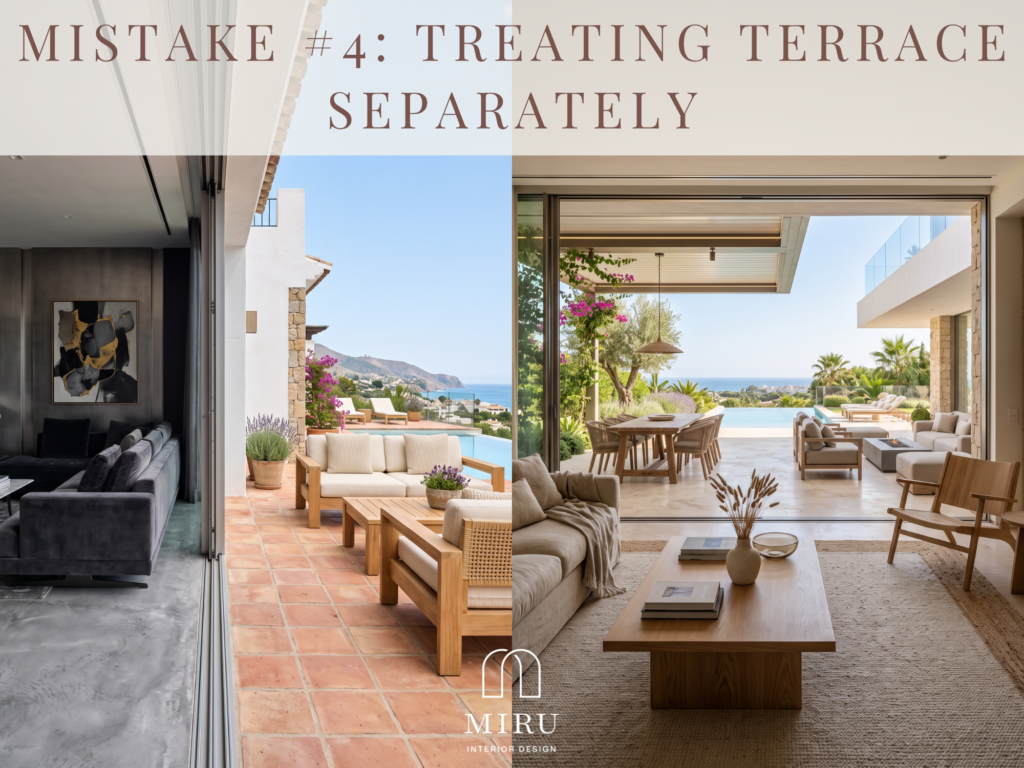
In Spain, and particularly on the Costa del Sol, outdoor spaces can function as an extension of the home for much of the year.
Consider terraces, pools and gardens alongside the interior from the beginning. Think about outdoor dining and lounge areas, shade, lighting and the materials visible through large windows and sliding doors.
Using related colours, materials and furniture styles inside and outside helps create a natural connection between the spaces.
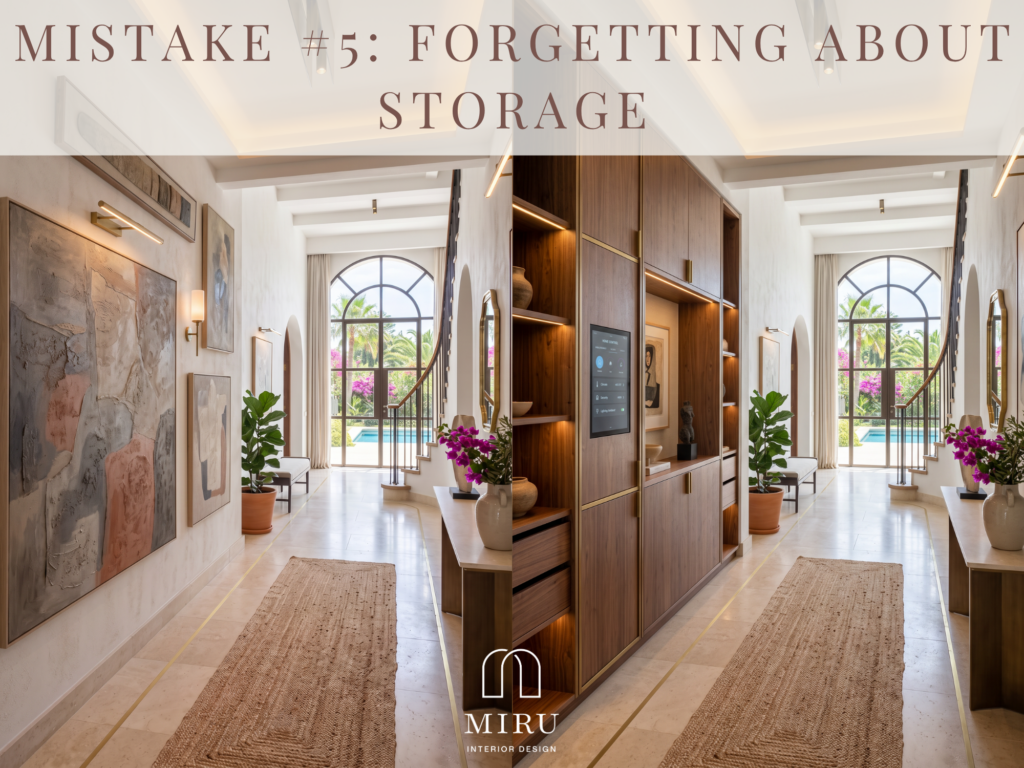
Storage is often treated as something that can be added later, but the best solutions are usually integrated into the design from the beginning.
Consider what needs to be stored in each area and where built-in cabinetry could make use of walls, niches or otherwise unused space.
Planning storage early helps keep the finished interior functional, organised and visually calm.
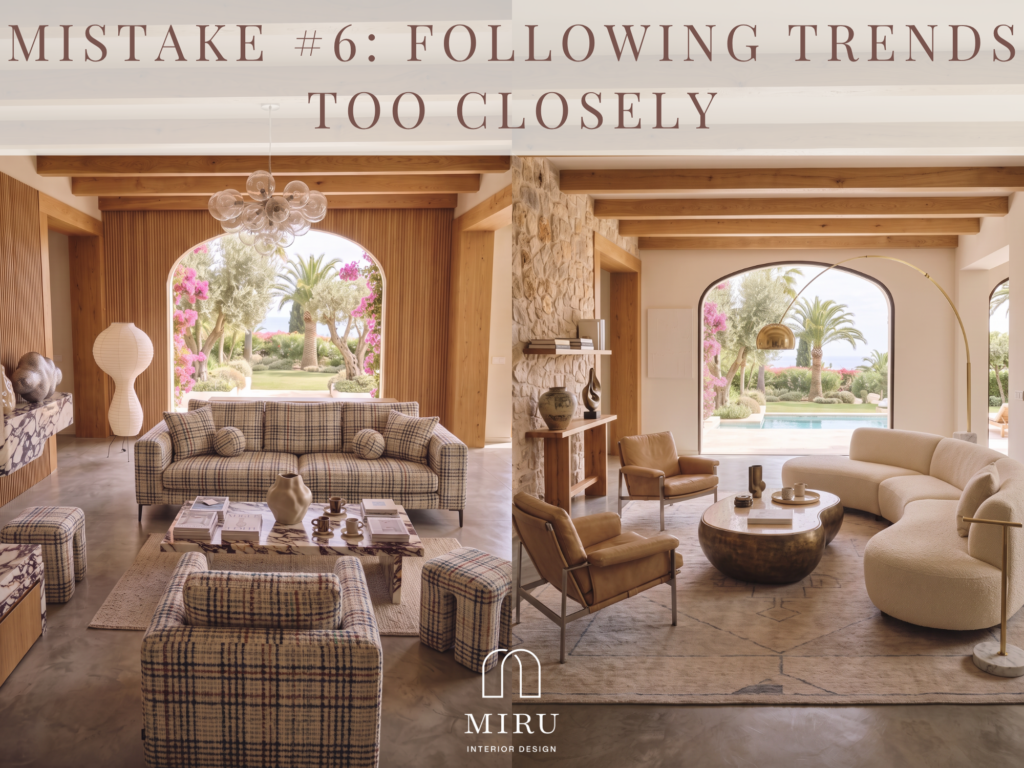
Interior trends can be a useful source of inspiration, but a renovation is a long-term investment.
Rather than following every current trend, consider the architecture and character of the property. Original arches, timber beams, stone or terracotta can work beautifully alongside contemporary furniture, lighting and finishes.
The result feels current without losing the identity of the home or becoming dated too quickly.
A successful renovation is often determined before the first wall comes down.
Planning the layout, lighting, materials and key product selections before construction begins reduces last-minute decisions and helps the finished property feel cohesive rather than assembled one decision at a time.
For homeowners and property investors, investing time in the planning stage can make both the renovation process and the final result considerably better.
MIRU Interior Design provides interior design services for private residences, investment properties and developments in Marbella and across the Costa del Sol.
From layouts and material selections to lighting, furniture and project coordination, each project is considered as one complete design.

